
Big New Update: ERJ Family 2.1.0 Released
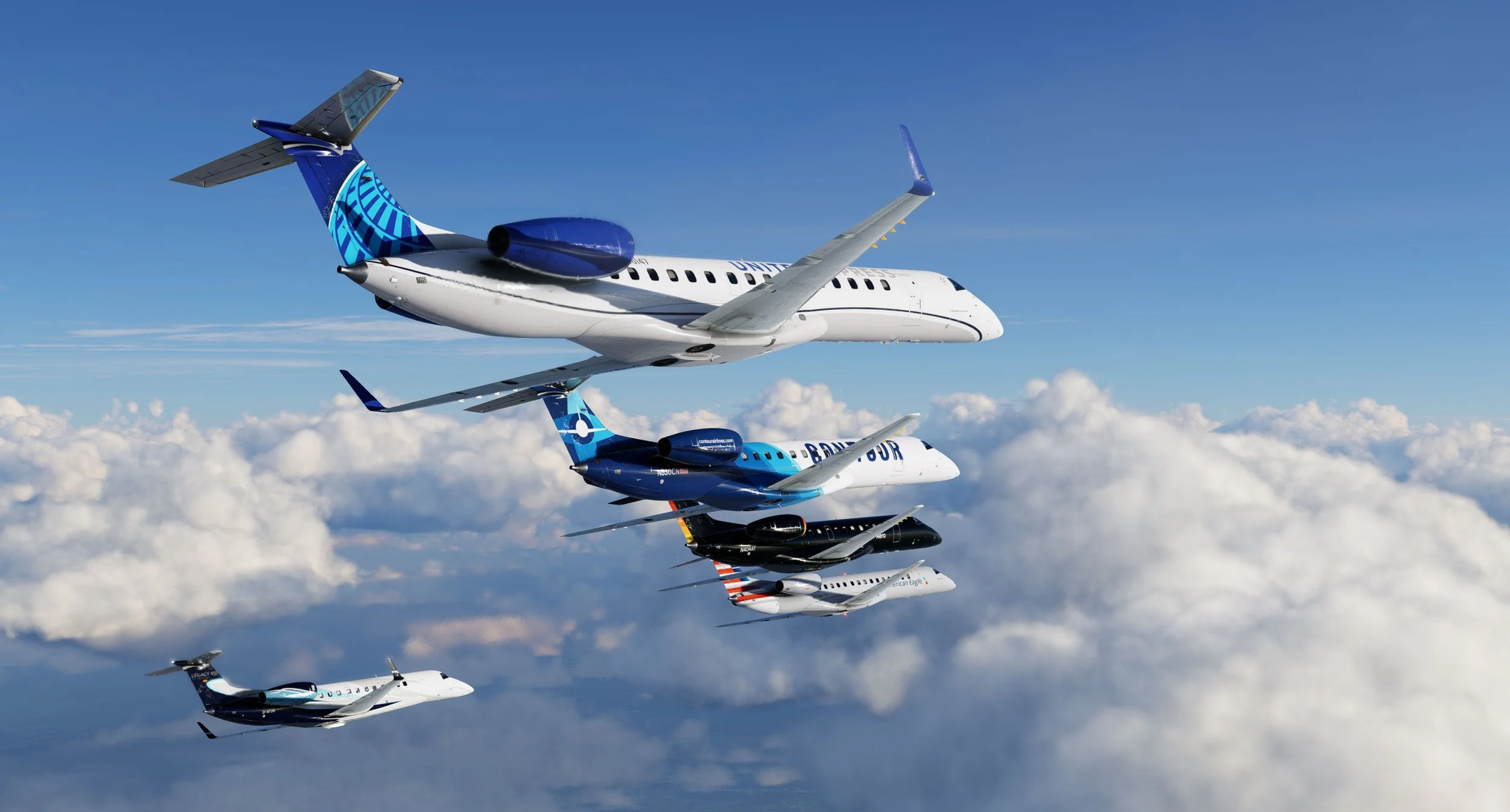
We’re proud to present the first major update for our new ERJ Family 2.0!
ERJ Family 2.1.0 is a huge step forward. It brings many new features, a very long list of improvements and fixes, and most importantly, a much more stable and complete experience across the whole family.
If you were excited about the ERJs but wanted to wait until the first big post-launch update, this is the one.
This update fixes virtually everything that was reported after launch, resolves all known crash-to-desktop issues that were successfully replicated, adds the remaining missing avionics features, improves sounds inside and outside the aircraft, expands GPWS functionality, completes all AirComms tutorials, and brings many important systems and handling refinements.
In other words: the ERJ Family 2.0 is now even more polished, even more complete, and safer to buy with confidence.
Highlights
Virtually everything reported after launch has been addressed
All known CTDs fixed
All missing avionics features added
Major sound improvements inside and outside the aircraft
Speedbrake system updated to work according to the AOM
All AirComms tutorials are now included
New GPWS system with two selectable configurations
Stall warning indication added to the PFD
Cabin announcements enabled
Enhanced ITT throttle response for much more stable engine behavior
Why this update matters
The ERJ Family 2.0 already launched as a very deep and highly capable simulation, but releases of this size always benefit from real-world customer feedback. That feedback helped us go through the aircraft in great detail and tighten up everything from avionics logic to sounds, systems, handling, warnings, map behavior, and interaction.
So while 2.1.0 includes some very visible new features, the real story here is stability.
This update makes the ERJs more dependable, more complete, and more enjoyable to fly regularly.
Avionics completion and polish
One of the biggest parts of this update is avionics.
We have now added the remaining missing avionics features, including the VOR mode annunciator on the FMA, drift indicator on the HSI, and the PLI stall warning indication on the PFD. On top of that, many avionics bugs and display issues have been fixed, from glidepath and GS pointer behavior to brightness dependencies, AHRS alignment issues, navmap problems, and waypoint display inaccuracies.
That means fewer odd behaviors, fewer distractions, and a more complete flight deck overall.
New GPWS options
The GPWS system has received a major upgrade and now comes with two selectable callout configurations:
Default:
500 - 200 - Approaching minimums - Minimums - 100
Advanced:
500 - Approaching minimums - Minimums - 100 - 50 - 40 - 30 - 20 - 10
These can be configured in the EFB, giving you more control over the experience you want. We also replaced the minimum callout and added the GPWS TERRAIN SYS OVRD button to mute ground proximity warnings when appropriate.
Sound improvements across the aircraft
This is also a major sound update.
We made broad improvements to the sound experience, including revised startup sounds, better exterior engine behavior, smoother cockpit-to-cabin transitions, improved fan sounds, replaced altitude and minimum callouts, added the Doppler effect on exterior engines, enabled cabin announcements, improved reverse thrust sound behavior, refined wind sound limiting, and added new warning and TCAS sounds.
This makes the aircraft feel much more alive and much more cohesive in day-to-day flying.
Systems and handling refinements
We also spent a lot of time refining how the aircraft behaves.
The speedbrake system was overhauled to better match the AOM, spoilers now behave correctly without hydraulic power, ground spoilers deploy correctly, speedbrakes auto-close when appropriate, and the parking brake logic has been improved. The fuel system was updated to heat fuel more efficiently, several EICAS and caution message issues were resolved, and many cockpit interaction fixes have been made throughout.
These changes aren’t flashy on their own, but together they make the aircraft feel much tighter and more reliable.
Stability and usability
Just as important, all known replicated CTD issues have been resolved, and AirComms has been improved significantly, including fixes for loading issues and the addition of all tutorials.
That means a smoother onboarding experience for new users and fewer interruptions for everyone else.
Ready to fly?
If you’ve been waiting for the first big confidence-building update, this is it.
Not sure which Embraer is right for you? Take our quick quiz!
Full release notes
You can read the full release notes here.